
One shopper. One record.
Every device. Every rooftop.
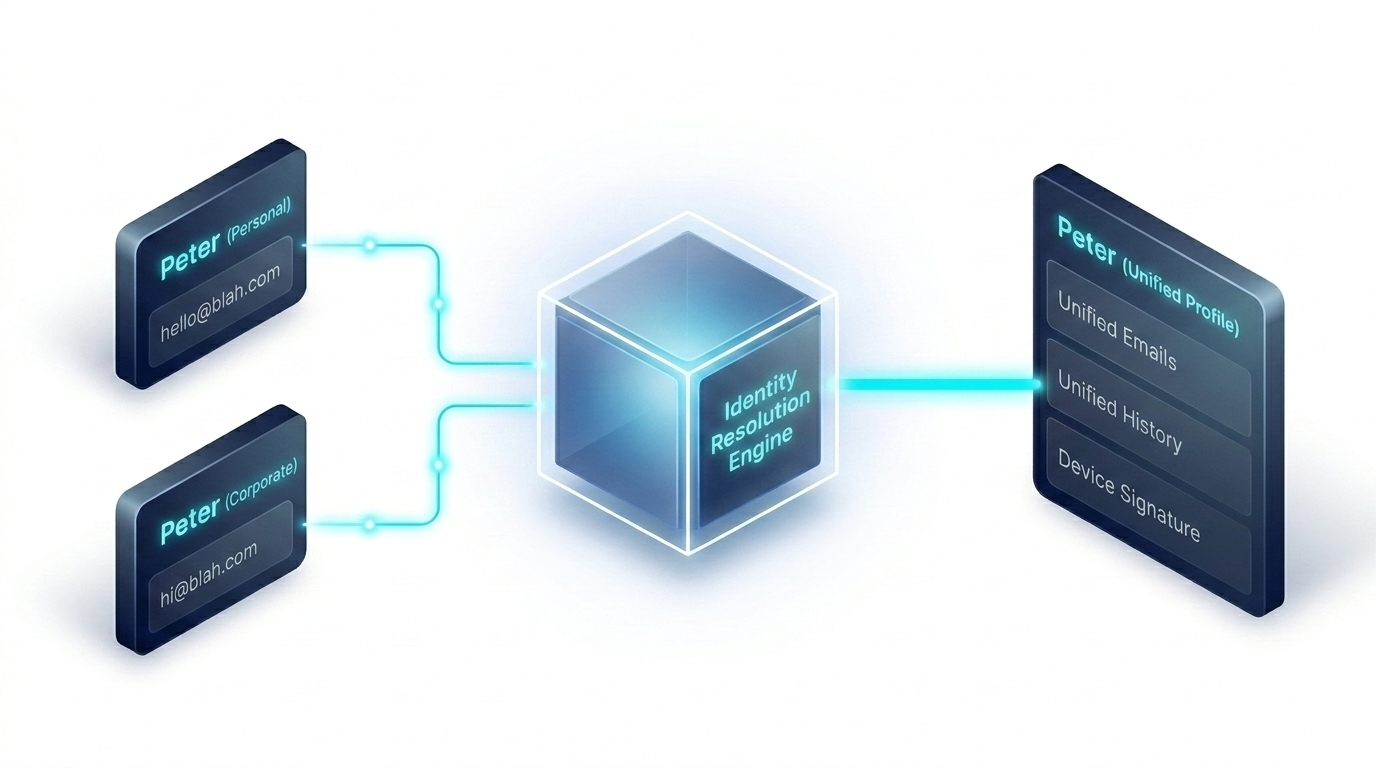
Identity Resolution is Orbee's capability for collapsing fragmented shopper data into a single profile per person — across devices, channels, rooftops, and time. Powered by Polymer, our polymorphic identity graph, using deterministic matching trained on automotive shopper signals. 98% match rate, in real time.
A polymorphic identity graph, reconciling many shapes of identity
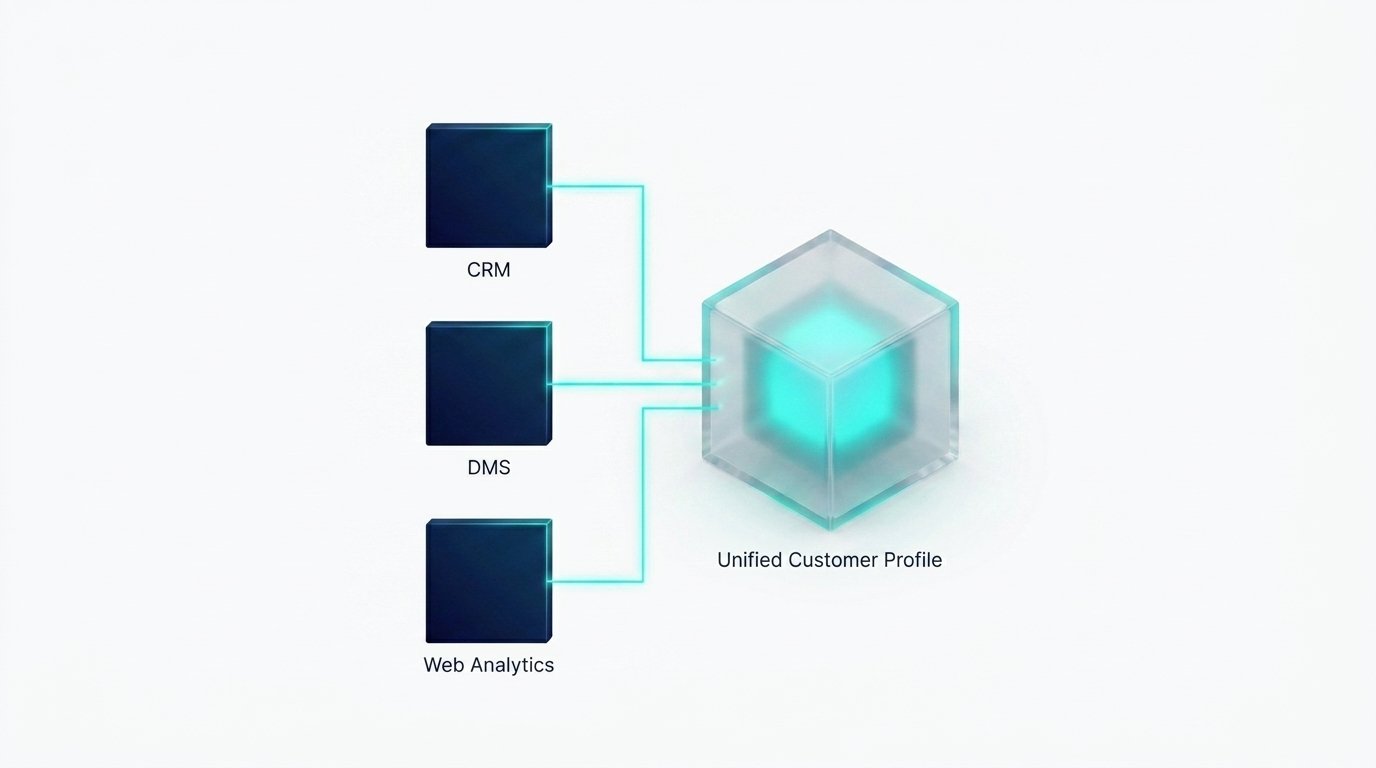
Identities take many shapes — email, phone, cookie, device, CRM key, DMS key — and Polymer reconciles them deterministically. Every event Orbee captures feeds it identity signals.
Hashed email and phone as primary keys.
From forms, CRM records, DMS sales, service appointments, call tracking, and SMS opt-ins. When the same hashed email appears on a CRM record at one rooftop and a website session at another, those records collapse into one identity.
- Hashed email across every source
- Hashed phone from calls & CRM
- Deterministic collapse rules
Persistent first-party identifiers.
A persistent first-party cookie from Orbee Native survives third-party cookie deprecation. Device IDs handle cross-session identification on the same device.
- First-party cookie persistence
- Cross-session device IDs
- IP & household contextual signals
CRM and DMS keys anchor offline records.
When an offline DMS sale ties to a web session via VIN and email, those records collapse into one identity — anchoring every offline record to a known person.
- CRM & DMS key anchoring
- VIN-based offline-to-web ties
- Service appointment matching
Identity errors compound downstream.
So Orbee defaults to deterministic.
Most identity vendors lean on probabilistic graphs — fuzzy matching that looks right in aggregate but introduces silent errors at the individual level.

Hashed email & phone
Hashed email and phone matches are the primary join keys, with cookie persistence enforced via first-party storage.
Offline records anchored
CRM and DMS keys anchor every offline record to a known identity — no inference required for the records that matter most.
Probabilistic, but visible
Probabilistic enrichment is available for hard cases — but flagged as such. You can always see whether a match is hard or inferred.
Accuracy that translates to wasted spend recovered and signal preserved
A bad match means a sold customer gets retargeted as conquest. A missed match means a lost shopper gets ignored. Polymer's accuracy shows up everywhere downstream.
Closed-loop attribution
Tie every ad impression and email open back to the actual VIN sold, by matching DMS sales records to the pre-purchase journey.
AttributionDe-duplicated audiences
Stop paying Google to retarget the same person across three rooftops and four devices. Identity resolution collapses them into one.
AdvertisingCross-rooftop intelligence
A buyer who tested a Toyota at one store and bought at another — Polymer surfaces both touches as part of the same journey.
GroupReal-time personalization
When a known shopper returns, identity resolution happens in milliseconds — fast enough to drive on-page personalization in real time.
Web
Auto shoppers don't behave like ecommerce buyers.
Generic identity tools collapse under that complexity.
They research for 90+ days. They visit from a desktop at work, a phone on the lot, a tablet at home. They submit one form with a personal email and another with a work email. They sign at the dealership using a third email entirely. Orbee customers regularly see 98%+ match rates — validated and tuned against your specific data shape at implementation.
See how Polymer collapses fragmented records into one shopper.
We'll match against a sample of your data live on the call.
98%+ match rates · Deterministic by default